Generative Engine Optimization (GEO): How B2B and Service Brands Get Recommended by AI
A practical, evidence-based guide to generative engine optimization for B2B, SaaS and professional service companies.
Generative engine optimization (GEO) is the work of making your business easy for AI systems such as Google’s AI Overviews and AI Mode, ChatGPT, Gemini, Copilot, and Perplexity to understand, trust, and recommend. For B2B and professional service companies, GEO rests on the same foundation as good SEO: crawlable pages, clear answers, and verifiable expertise. What it adds is a stronger focus on specific, comparable information, consistent brand facts across the web, and third-party mentions that AI tools can draw from.
A growing share of buyers now start their research by asking an AI assistant a question instead of typing a few keywords into Google. “What are the best managed IT providers for a 50-person law firm?” “Which accounting software works for a multi-location restaurant group?” The answer they get may name three or four companies. If yours is not one of them, you may never know you were considered.
This guide explains what GEO actually involves, what is verified and what is speculation, and the practical steps B2B, SaaS, and professional service companies can take now.
What Is Generative Engine Optimization?
Generative engine optimization is the practice of improving how often, and how accurately, AI-generated answers mention and link to your business. You may also see it called answer engine optimization (AEO) or AI search optimization. The terms overlap heavily.
Traditional SEO aims to rank a page in a list of results. GEO aims to make your business part of the answer itself, either as a cited source or as a recommended provider.
Is GEO Different From SEO?
Less than many vendors suggest. Google’s own guidance on AI features states that there are no additional requirements to appear in AI Overviews or AI Mode. A page must be indexed and eligible to show with a snippet, and the same SEO best practices apply. Google also says you do not need special schema, AI-specific text files, or new machine-readable files.
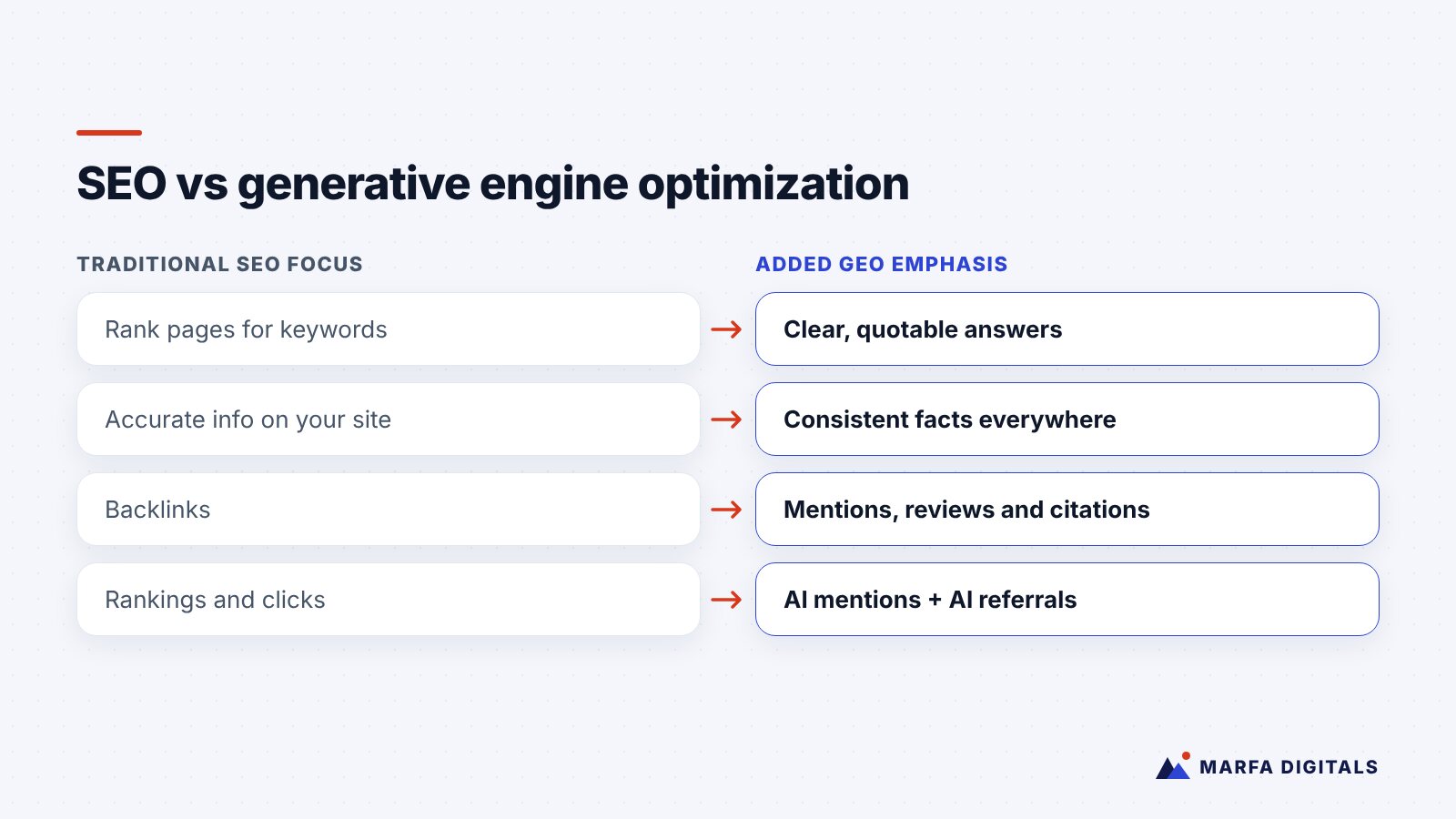
So GEO is not a replacement for SEO. It is SEO with a sharper emphasis on a few things that matter more when an AI system is summarizing and comparing:
| Area | Traditional SEO focus | Added GEO emphasis |
|---|---|---|
| Content | Ranking pages for target keywords | Clear, quotable answers to specific questions |
| Brand information | Accurate on your own site | Consistent everywhere AI systems may look |
| Authority | Backlinks | Mentions, reviews, and citations in credible sources |
| Comparison | Often avoided | Honest comparisons and “who it’s for” guidance |
| Measurement | Rankings and organic clicks | Mentions in AI answers plus AI referral traffic |
How AI Systems Decide Which Businesses to Mention
No AI company publishes a ranking formula, so be wary of anyone who claims to know one. What we can say with confidence is that AI answers are built from information the system can access: pages it has indexed or retrieved, plus what it learned during training. Google says AI Overviews and AI Mode draw on its Search index. ChatGPT’s search feature relies on OpenAI’s own crawler, called OAI-SearchBot, according to OpenAI’s crawler documentation.
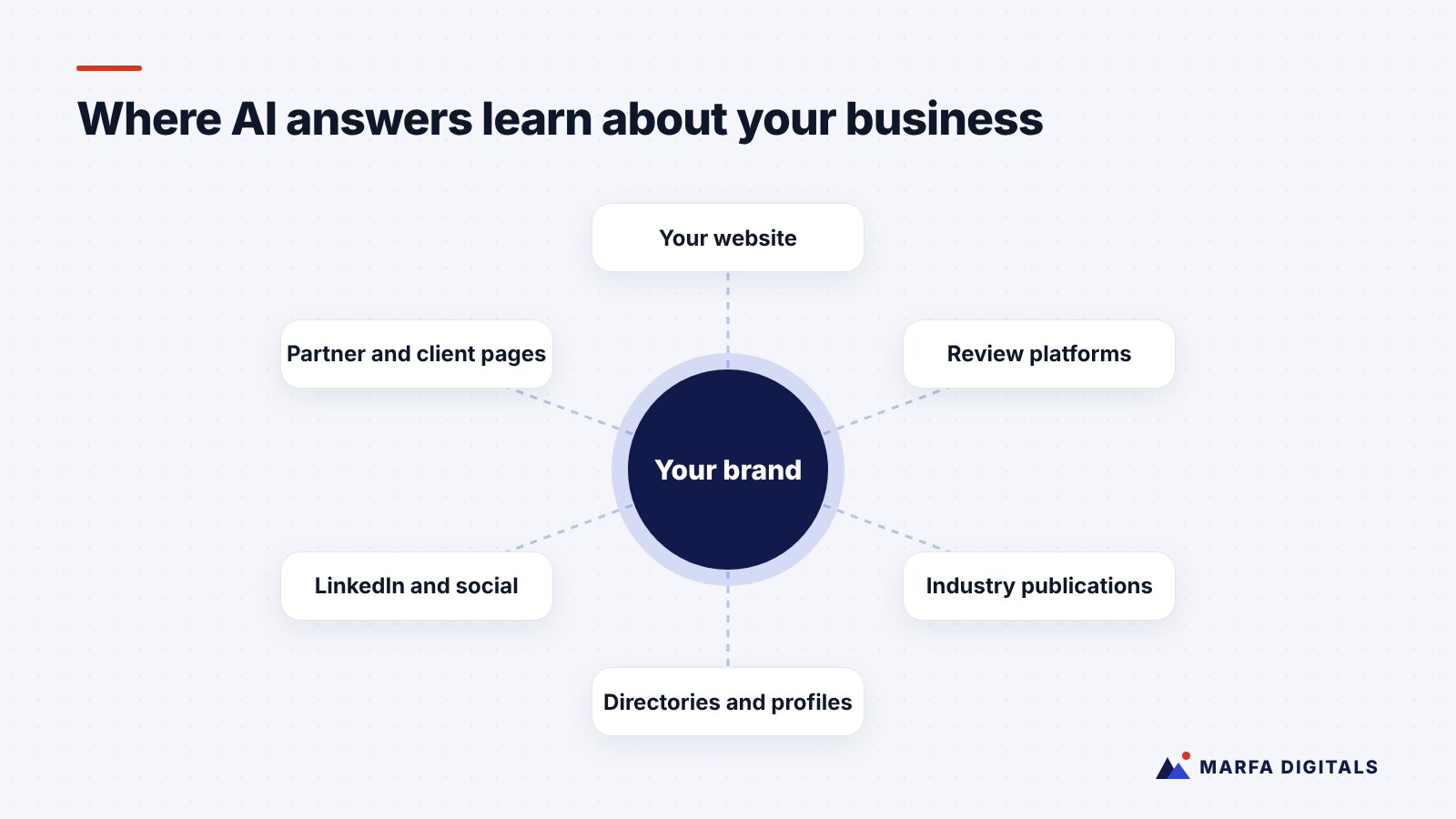
That leads to a practical conclusion: the more clearly and consistently credible sources describe what you do, who you serve, and why you are good at it, the easier it is for an AI system to include you.
8 GEO Steps for B2B and Service Companies
1. Make sure AI crawlers can reach your site
Check your robots.txt file and any firewall or CDN bot protection. If you block Googlebot, you cannot appear in Google’s AI features. If you block OAI-SearchBot, you limit your visibility in ChatGPT search. Many companies block AI crawlers by accident through security settings, so confirm with your developer or host.
2. Build one strong page for each core service or product
Generic “Services” pages that list everything in one paragraph are hard for anyone to summarize. Create a dedicated page for each offering that explains what it is, who it is for, what problems it solves, how the engagement works, and what affects pricing.
3. Answer the questions buyers ask before they talk to sales
Ask your sales team for the ten questions prospects ask most. Answer each one directly on your site, in the first sentence or two of a section, then add the detail. These are exactly the questions people now type into AI assistants.
4. Publish honest comparison and “best for” content
Buyers ask AI tools to compare options. If your site explains when your approach is the right fit, and when it is not, you give the AI accurate material to work with. “In-house vs outsourced IT” or “Agency vs freelancer for paid ads” can be more useful than another post about your company.
5. Keep brand facts consistent everywhere
Your company name, description, services, locations, and leadership should match across your website, LinkedIn page, Google Business Profile, Crunchbase, G2 or Clutch profiles, industry directories, and press mentions. Inconsistent details give AI systems reasons to hesitate or get facts wrong.
6. Earn mentions in places AI systems trust
Third-party sources carry weight. That includes industry publications, podcasts, association directories, partner pages, review platforms, and credible “best of” lists. This is digital PR, and it supports traditional SEO too.
7. Show real expertise and real proof
Name the people behind your work, explain your process, and share results you can verify. Original insights, such as what you see across client accounts or a clear framework your team uses, are harder to replicate than generic advice and more likely to be cited.
8. Use structured data that matches what is on the page
Organization, Product, Service, and Article schema help search engines interpret your pages. Google is clear that structured data should match visible content, and that no special AI markup is required.
What to Skip
- Do not rely on llms.txt to fix visibility. Google says it does not require AI-specific text files for its AI features. It will not make up for weak content.
- Do not mass-produce thin AI content. Publishing hundreds of near-identical pages rarely builds trust with readers or search systems.
- Do not hide key content in images or PDFs only. Google recommends keeping important content in text form.
How to Measure GEO
GEO measurement is still imperfect, so use several signals together:
- Google Search Console: Google says appearances in AI features are included in the Performance report under the Web search type. Watch impressions and clicks for your key service pages.
- Google Analytics 4: Create a segment or channel group for referrals from AI assistants such as chatgpt.com, gemini.google.com, copilot.microsoft.com, and perplexity.ai. ChatGPT often adds a UTM source to the links it cites. Some AI-driven visits still appear as direct traffic, so treat the numbers as a floor, not a total.
- Manual prompt checks: Each month, ask several AI tools the questions your buyers ask. Record whether you are mentioned, how you are described, and which sources are cited.
- Sales conversations: Add “How did you hear about us?” to your forms and include AI assistants as an option.
Local Business? Start Here Instead
If most of your customers come from a specific city or service area, your Google Business Profile and reviews play a bigger role. Our guide to getting recommended in Google’s AI Mode and our local SEO checklist cover that side in detail.
Frequently Asked Questions
How long does GEO take to work?
Technical fixes like unblocking crawlers can matter quickly. Content, consistent brand information, and third-party mentions build over months, much like SEO.
Can I pay to appear in ChatGPT or Google AI answers?
Not in the organic answer. Both Google and OpenAI offer ads that appear alongside AI responses, but those are labeled placements and separate from the answer itself. See our guide to ChatGPT ads for details.
Does GEO matter for B2B companies with long sales cycles?
Yes, arguably more. B2B buyers do substantial research before contacting a vendor. Being included and described accurately in that research can shape the shortlist.
Turn AI Visibility Into Pipeline
GEO is not a trick. It is the discipline of making your expertise clear, consistent, and verifiable wherever buyers and AI systems look. If you want help building that foundation, explore our SEO services or see how our content team creates material that earns attention. When you are ready, request a free growth plan.
Sources
- Google Search Central, AI features and your website (last updated December 10, 2025)
- OpenAI, Overview of OpenAI crawlers